
Buying a high-end Apple device, such as the iPhone 16 Pro or iPad with top-of-the-line chips, is a considerable investment for many users in the European Union. However, those who have purchased the latest Apple devices are facing increasingly frustrating situations. For example, the unavailability of Apple Intelligence in Europe, and other features such as iPhone Mirroring and SharePlay, seems to have no clear justification.
Update 2025
In an update on Apple's official page, "How to get Apple Intelligence", it is stated that users in the European Union will start receiving the basic features of Apple Intelligence starting in April 2025.
"In April, many of Apple Intelligence's core features will begin rolling out to iPhone and iPad users in the EU."
Also starting in April, Apple will release a software update that will offer expanded language compatibility. Chinese, English (India), English (Singapore), French, German, Italian, Japanese, Korean, Portuguese, Spanish, Vietnamese and other languages will be supported for Apple Intelligence.
Final update.
Table of Contents
Premium devices, limited experience.
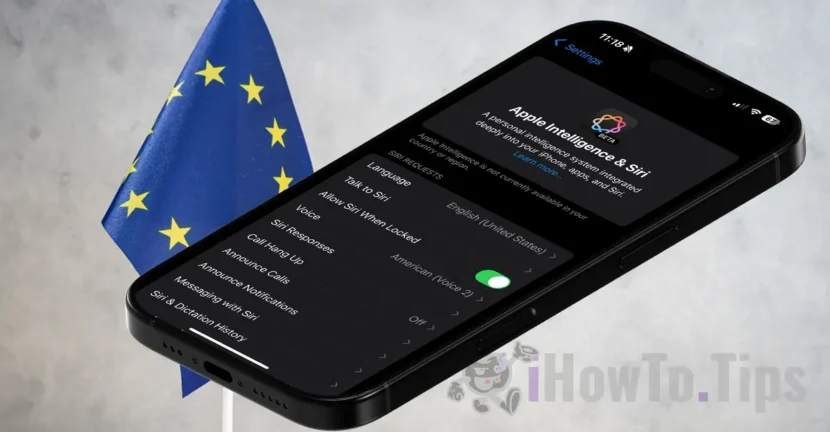
Apple Intelligence, a suite of artificial intelligence-based features, is available on iPhone and iPad devices only outside the European Union, even if users in the EU have compatible devices and are running the latest version of iOS or iPadOS (18.1 and later). According to the official documentation, Apple restricts access to these features in the EU if the user has an Apple account registered in this region. On the other hand, the same features are available on macOS Sequoia 15.1, even for users in the European Union. So Apple Intelligence in Europe can only be used on Mac.
This situation begs the question: why does Apple apply restrictions on the iPhone and iPad, but not on the Mac? In addition to this question, there is another very strange situation. Let's say that the way Apple's new services work wouldn't be in line with European Union legislation, but that doesn't justify limiting a user who chooses to install a public beta version, or even less developers. For example, iOS 18.2, the developer beta, does not receive support for Apple Intelligence for European Union countries. Basically, this policy limits a developer's right to create apps and games that use AI features.
At the same time, some large stores in the European Union are using Apple Intelligence as a marketing tool to promote the iPhone 16 product. (altex.ro)
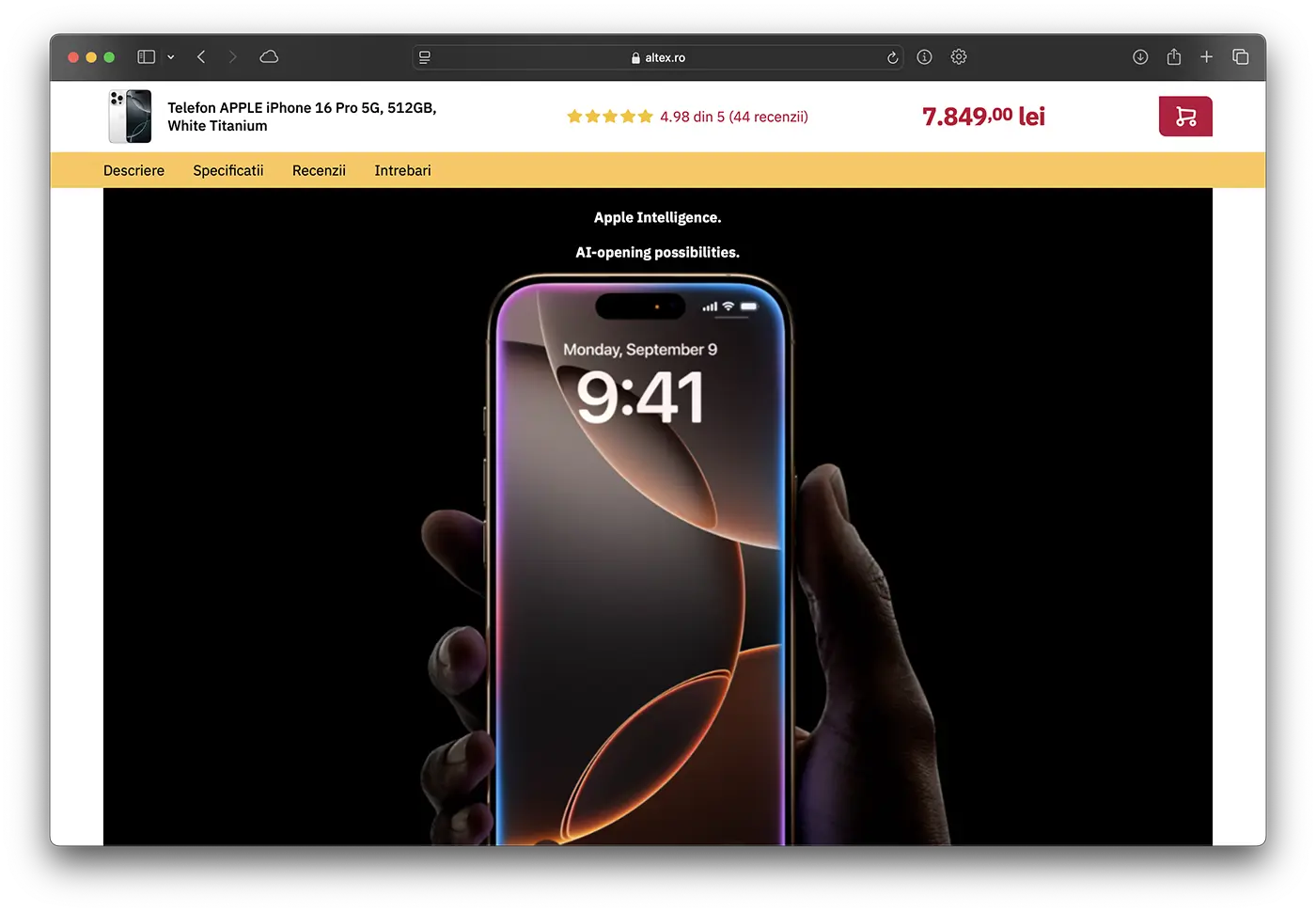
Apple Intelligence in Europe. Regulations or strategic choices?
Apple has indicated in the past that some of its limitations are imposed by strict regulations in the European Union, particularly those regarding data privacy and anti-competitive practices. However, the justification becomes problematic given that macOS, a platform that is also subject to EU law, provides access to the same restricted features on iOS and iPadOS.
However, let's look back a little and see what experiences Apple has had with the European Union.
Fines and investigations for anti-competitive practices.
In 2021, the European Commission accused Apple of violating competition rules, particularly through the taxes imposed on the App Store. This investigation can result in fines of up to 10% of the company's global revenue.
Complaints from developers such as Spotify and Epic Games have highlighted how Apple protects its own ecosystem by restricting competition.
Apple was also forced to allow the installation of applications and games from outside the App Store for iPhone and iPad devices. This implementation was done by Apple, but with some costs, which attracted other problems. In 2023, Apple was targeted by other complaints about App Store policies, including forcing small developers to use its payment system and charging high fees.
Related: You will be able to install applications on iPhone and outside the App Store (iOS 17.4)
Data Privacy and Use.
The absence of Apple Intelligence in Europe could also be related to some privacy issues the company has had in the past.
Apple has been fined 8 million euros in France in 2023 for using data without clear consent. In addition to this fine, Apple is the subject of investigations by data protection authorities in several EU countries (including Germany and France) for the way it collects and uses user data.
Other investigations into how Apple handles user data are ongoing.
Compliance with technical regulations.
Apple has been forced to adopt USB-C as the universal standard for chargers starting in 2024, underscoring the company's resistance to EU-imposed rules. Basically, the European Union forced Apple to ditch the Lightning charging port on iPhones, AirPods, Magic Mouse, and more.
Even at the level of the countries of the European Union, the Apple company did not have very pleasant experiences. In Italy, Apple was fined 10 million euros in 2020 for misleading advertising about the water resistance of iPhones.
Language barriers for Apple Intelligence in Europe
Another important factor is the limited language support for Apple Intelligence in Europe. Currently, the features are only available in English (US), and will be gradually expanded to other languages. However, local language and regulations do not justify the absence of functionality on iPhone and iPad.
Supported languages: Apple Intelligence is available in English (US) in most regions around the world. In December, Apple Intelligence will add support for English (Australia), English (Canada), English (Ireland), English (New Zealand), English (South Africa), and English (UK). Over the course of the next year, Apple Intelligence will expand to more languages, like Chinese, English (India), English (Singapore), French, German, Italian, Japanese, Korean, Portuguese, Spanish, Vietnamese, and others.
Impact on users
This situation puts EU users at a disadvantage, despite the premium prices paid for Apple devices. For example, someone buying an iPhone 16 Pro for the promised features may find they don't have access to smart writing tools, advanced organization in Photos apps, or smart replies in Mail and Messages — features available in other regions.
Conclusion
Apple, a company recognized for innovation, risks disappointing its European users with the imposed limitations. In a region where antitrust and data protection rules are strict, EU users end up paying for devices that don't reach their full potential. It is important for Apple to clarify whether these restrictions are a consequence of European regulations or just a strategic decision aimed at protecting its ecosystem in the face of increasingly strict control by the authorities.
Beyond the issues between the European Union and Apple, the restriction of Apple Intelligence in Europe does nothing but create frustration among users and developers of applications based on this new feature.